Orange Cyberdefense Switzerland

Orange Cyberdefense Switzerland
is the expert cybersecurity business unit of the Orange Group, providing consulting, solutions and services to organizations around the globe.
As Europe’s go-to security provider, we strive to protect freedom and build a safer digital society.
At Orange Cyberdefense Switzerland we are covering all cybersecurity topics relating to infrastructure, the network, data centers and the cloud; flexibility to adapt to the needs of all customers, of all sizes (including the smallest); Swiss roots and teams locally present in Switzerland, close to customers.
What’s more, our reputation and proven expertise in terms of cybersecurity, ranging from pentesting to managed services, including incident response and GRC (Governance, Risks and Compliance) are assets that will allow us to offer the best to Swiss companies.
Finally, while the move to the cloud continues to transform our customers’ IT ecosystems, our strong cloud expertise is a major and essential asset in providing relevant cloud security services to our customers.
Sessions from previous events
Swiss Cyber Storm 2025
Wyse Management Subversion: Taking over Dell's Wyse Management Suite
16:20–16:50 · Panorama – Sponsoring

Show description
By its own definition, Dell’s Wyse Management Suite is „a secure hybrid cloud management solution for Dell thin clients”. While attempting to determine how secrets are encrypted in the policies pushed to thin clients, we stumbled down a rabbit hole which led to the discovery of multiple vulnerabilities.
Swiss Cyber Storm 2024
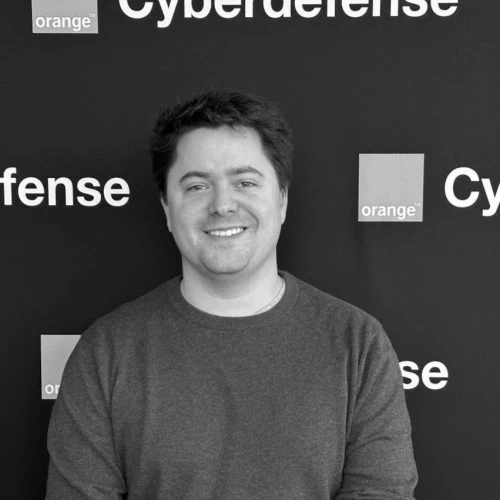
Modern TPM Sniffing and Multi-Factor Authentication
14:00–14:30 · Panorama – Sponsoring
Show description
Although the TPM sniffing attack has been known and utilised for nearly five years, it has evolved significantly since its introduction. The attack process has become simpler and more generalised, resulting in increased speed and reliability. This presentation will first share insights gained from using this attack on dozens of machines over the years, highlighting key factors that can enhance its execution. The reduction in complexity and attack time now makes it possible to compromise a machine in just a few minutes, infect it, and then restore it before the owner even realises it was gone. Secondly, the presentation will explore the multi-factor authentication provided by BitLocker. While multi-factor authentication is crucial for maintaining a baseline level of security, various attack scenarios remain possible even with this configuration. For instance, a malicious user could use TPM sniffing to escalate privileges on a machine if they know the second authentication factor. Although this possibility has been discussed in several publications, Microsoft’s documentation on BitLocker is only partial, and some mechanisms remain unexplored. No existing tool has been able to execute this attack when BitLocker is not in transparent mode. This part of the presentation will delve into the operating system’s inner workings, examining the Windows bootloader and its interactions with the TPM. The goal is to understand how multi-factor authentication works and how it might be bypassed, enabling to decrypt the disk and gain highly privileged access to the operating system.